
SaaS Outbound Qualification: How to Stop Passing Weak Replies to Founders

I’ve seen teams lose momentum when they treat lead flow like wishful thinking. Relying only on inbound visitors leaves your company exposed to market swings and seasonality.
I’ll show you how to stop passing weak replies to founders and create a repeatable, signal-based system that fills the pipeline. This piece outlines a practical shift from generic marketing playbooks to a precise outbound approach that sparks real conversations.
You’ll learn to build targeted prospect lists, use simple tools for research, and craft emails that bypass spam filters. I explain how sales teams can own timing, define the ICP, and invest in revenue rather than just activity.
For a step-by-step plan that aligns prospect research, outreach channels, and follow-up sequences, see my guide on building a strong sales pipeline with strategic.
Is Gasimo the right outbound partner for you?
Three fields, thirty seconds. We only follow up when there is a genuine fit.
Key Takeaways
- Don’t rely solely on organic traffic; build a repeatable system to protect revenue.
- Move from generic lead generation to targeted prospect lists and signal-based outreach.
- Invest time in quick research to personalize emails and avoid spam filters.
- Design multi-channel sequences that combine email, phone, and social touchpoints.
- Measure opens, replies, and conversion to optimize campaigns and ROI.
The Reality of Modern Outbound Sales
With inbox noise at an all-time high, generic messaging barely registers with prospects. Response rates for bulk email fell from roughly 2–3% in 2015 to about 0.1–0.5% in 2023. That shift tells you something simple: volume no longer equals results.
I see teams still leaning on the same marketing playbooks while providers use AI to judge sender reputation. Gmail and others flag generic sequences early, so many emails never reach a real buyer.
The good news is that this forces a smarter approach. Successful companies abandon blasting and adopt precision strategies that combine signals, quick research, and better personalization.
Use multiple channels — email, phone, social — to expand your funnel. Test an ICP hypothesis fast; high-growth teams iterate on prospect profiles in weeks rather than waiting for organic growth. This mixed approach protects pipeline and improves conversion over time.
- Evolve your strategy: trade volume for signal-driven outreach.
- Layer channels: don’t let a single channel limit reach.
- Measure fast: use data to refine target, message, and timing.
Why Generic Lead Generation Fails Founders
Generic playbooks no longer win meetings; buyers spot copy-and-paste outreach in seconds. Decision-makers get hundreds of messages each week, so canned content rarely earns a glance. That lowers reply rates and wastes your team’s time.
The Death of Templates
Templates erode trust. AI-generated intros and recycled lines read the same across companies. Buyers delete those messages and remember the sender as noise. Your sender reputation drops, and future campaigns suffer.
Spam Filter Realities
Gmail and other providers evaluate sender reputation, domain age, and message relevance before delivery. Low-signal blasts fail these checks and get routed away from the inbox.
“Market saturation means authentic, signal-driven outreach is the only viable way to break through the noise.”
Data laws like GDPR and CCPA also make purchased list blasting a legal risk for your company. Teams that stick to volume-driven strategies see falling opens and weaker conversion.

| Failure Mode | Why It Happens | Immediate Impact | Fix |
|---|---|---|---|
| Template-heavy emails | Look generic to buyers and AI | Low opens, damaged reputation | Value-based pitching and signals |
| Purchased lists | Non-compliant and low quality | Legal exposure, poor response | Verified prospects and consent |
| AI-only intros | Often repetitive and obvious | Immediate deletion | Human edits + concise relevance |
- Result: Move from volume to precision.
- Action: Use quick research, signal-based targeting, and value-first outreach.
Defining SaaS Outbound Qualification
A clear vetting process helps teams stop guessing and start booking meetings with the right companies.
SaaS outbound qualification is the systematic process of identifying organizations with high conversion potential. I define it as the steps that confirm a lead fits your ICP before any outreach starts.
I recommend using data to filter out accounts that cannot afford your product or are mid-contract with a competitor. That saves your sales team time and protects revenue.
Segment by pain: group prospects by the problems they must solve so your messaging lands faster. This makes email and other outreach more relevant and increases conversion.
Align marketing and sales around the same target rules to avoid creating bad leads. Automate scoring and enrichments to handle volume, then let humans judge edge cases.
“Qualification is about time efficiency: fewer wasted touches, more real conversations.”
- Use data-driven filters to prioritize leads.
- Segment by pain points for targeted campaigns.
- Combine automation and human review for best results.
Building a High-Performance Ideal Customer Profile
To find the right buyers, you must pair firmographics with hiring velocity and funding signals. I start by listing basic company data, then add two dynamic layers: growth hires and fresh capital events.
Why this matters: dynamic signals reveal who is actively investing in growth. That makes your sales and marketing efforts more likely to convert into meetings and revenue.
Mapping the Buying Committee
I map the buying committee for each target company so outreach hits real decision paths. In the United States, a typical committee includes about 10–11 influencers.
Ensure at least five core roles: decision-maker, champion, influencer, signer, and point of contact. Missing any of those roles weakens your follow-up and reduces conversion.

- Use tools like Clay or ChatGPT to score accounts against your best customers.
- Treat the ICP as a 90-day program: test, collect data, then refine.
- Enforce account completeness so each company record includes all committee roles.
| Element | What to capture | Why it helps | Example |
|---|---|---|---|
| Firmographics | Industry, FTE (50–200), location | Basic filter for fit | Series A companies in North America |
| Growth signals | Hiring velocity, recent funding | Shows active purchase windows | Multiple product hires in past 60 days |
| Buying committee | 10–11 roles; 5 required | Improves targeting and follow-up | Decision-maker + champion + signer present |
The Role of Signal-Based Prospecting
Signal-driven prospecting finds buyers when they actually shop, not when we guess they might. I watch events—funding rounds, leadership changes, and hiring spikes—to spot genuine purchase intent.
Why that matters: contacting a company in week three of a hiring push for SDRs is different from cold-calling a stable firm. Timing shapes openness, budget windows, and the team’s willingness to change tools.
I use tools like Bombora and G2 to surface intent signals before I start any email or outreach campaign. These tools help prioritize leads so my team spends time where results are likely.
Example: a logistics software vendor targets firms that invested in IT infrastructure in the past 12 months. That specificity links product value to a real need and raises reply rates dramatically.
“Reaching the right company at the right moment boosts reply rates from industry averages into the realm of real conversations.”
| Signal | What it shows | Action |
|---|---|---|
| New funding | Budget window opens | Priority outreach with ROI case studies |
| Hiring surge | Capacity to adopt tools | Contact with product-fit messaging |
| Leadership change | Strategy reset | Engage with strategic playbook |
- Train an AI agent on case studies to create personalized content that matches prospect context.
- Differentiate surface signals from deep relevance by mapping signal → product value.
- Measure replies and refine the strategy so campaigns hit higher reply rates over time.
Crafting Messaging That Resonates with Buyers
Good messaging stops asking for a calendar slot and starts showing a clear operational win in the first line. I show a simple swap: replace a generic 15-minute ask with a one-line insight about a real gap you found on their site or in a recent post.

Value-Based Pitching
Lead with a specific outcome. Tell a prospect what they might save or improve in plain numbers.
Example: “I noticed your onboarding time is X; our product cut that by Y% for a similar company.” That sentence earns attention far faster than another calendar request.
Personalization at Scale
I use tools and small AI agents to scrape a prospect’s site and recent posts to craft unique email bodies. Train the agent on your differentiators so every message feels human.
- Reference a recent article or blog to show you did research.
- Pull a LinkedIn update in real time to keep content fresh.
- Use a polite break-up message asking why they’re silent; it often gets a helpful reply.
“Personalization isn’t just a name; it’s aligning value to the prospect’s current business stage.”
For building tight buyer segments and practical messaging workflows, see my guide to buyer personas. These steps protect your sales time and turn outreach into real conversations.
Implementing an Omnichannel Outreach Sequence
I map a day-by-day outreach rhythm that layers LinkedIn connection requests, short personalized emails, and timely calls. This mix increases touchpoints without feeling spammy.
Why it works: single-channel plays drop in effectiveness. Coordinated timing across surfaces makes your name familiar and trusted by the time you call.
Use LinkedIn comments, voice notes, and a quick connection message to reinforce the one-line value you sent by email. Add a low-budget ad behind those touches so your logo appears when they search.
Remember: 70% of meetings happen between the 5th and 8th touch. Most teams quit too soon—keep the cadence consistent and purposeful.
- Sequence example: day 1 LinkedIn connect → day 3 email with a short outcome → day 6 call attempt → day 10 LinkedIn engagement → day 14 break-up note.
- Track multi-touch attribution to see which mix of ad, email, and call drove the meeting.
- Treat SDRs as extensions of marketing: they amplify posts, run voice notes, and log touch context for better follow-up.
| Channel | Primary Role | When to Use |
|---|---|---|
| Familiarity & social proof | Early sequence + ongoing engagement | |
| Value pitch and case data | Days 2–7 for personalized outreach | |
| Call | Direct ask and qualification | Follow after 2–3 warm touches |
For a modern guide to generate quality meetings without relying only on cold calling, see my walkthrough at generate qualified sales meetings without cold.
Technical Foundations for Email Deliverability
Deliverability is the gatekeeper: no matter how smart your messaging, emails that don’t reach the inbox waste time and budget.
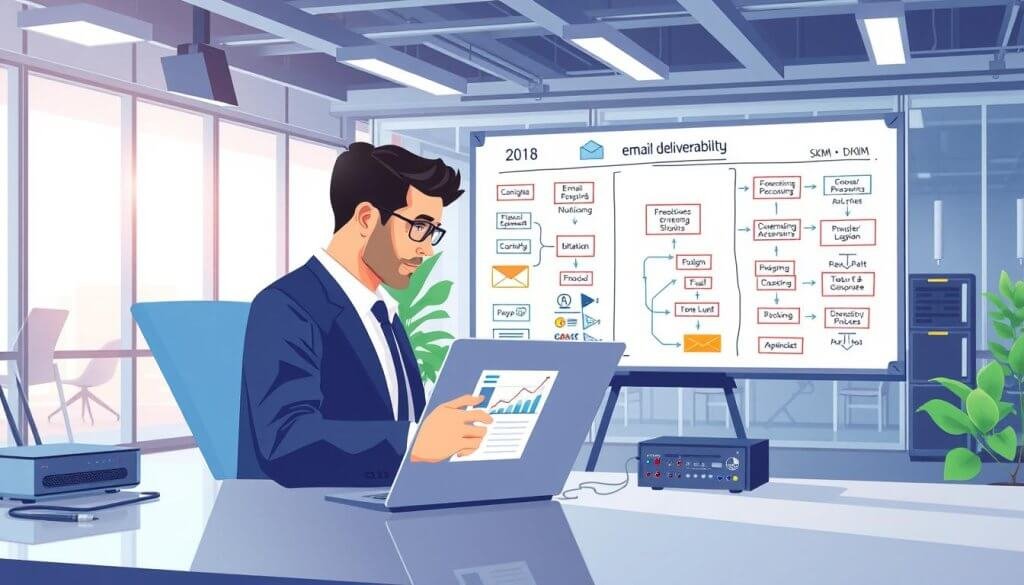
Start with infrastructure. I never send sequences from the main company domain. Use a dedicated sending domain so your primary domain stays safe from reputation hits.
Domain reputation management
Register and authenticate each sending domain with SPF, DKIM, and DMARC. These records prove you own the domain and reduce spam flags.
Keep reputation healthy by limiting aggressive sends and removing bounced leads fast. Aim to keep bounce rates below 3%.
Warming up new domains
I warm new domains for 4–6 weeks. Start with low volume and trusted contacts, then increase to 30–50 emails per inbox per day.
Ramp slowly and monitor opens and replies. Sudden spikes trigger filters and sabotage future outreach.
Monitoring sender scores
Check Google Postmaster Tools weekly to track domain reputation, spam rates, and delivery errors. Combine that with a sender-score service to spot trends.
- A/B test subject lines and preview text every campaign to boost opens and protect deliverability.
- Continuously prune inactive contacts to lower bounces and keep lists clean.
- Use simple monitoring tools and a weekly checklist as part of your outreach workflow.
“No personalization matters if your messages never arrive.”
How Gasimo Supports Lean GTM Teams
I partner with founder-led teams to turn early signals into bookable sales conversations.
My focus is on generating qualified replies, accepted SQLs, and booked calls for high-ACV AI companies and niche B2B firms selling into operations-heavy markets.
I help teams test ICPs, messaging, buyer wedges, channels, and offers before they commit to large retainers. That fast validation saves time and sharpens your sales strategy.
Gasimo is not a generic lead list provider. I build conversations with targetable buyers who show visible workflow pain and clear ROI potential. The result: higher-quality leads and cleaner handoffs to sales teams.
If you subscribe, submit an enquiry, or book a call, I may use those details to assess fit and share relevant playbooks, updates, and marketing. You can opt out of marketing communication at any time while still receiving the strategic insights you need.
“We focus on accepted SQLs and sales-ready conversations, not list volume.”
| Service | What I do | Result |
|---|---|---|
| ICP testing | Rapid hypothesis tests on buyer wedges | Validated targets in weeks |
| Message & channel trials | Short, measurable campaigns across email and social | Higher reply and meeting rates |
| Lead handoff | Sales-ready conversations with clear ROI | Accepted SQLs and booked calls |
- Why choose me: focused tools and strategy for founder-led, lean GTM teams.
- Example: AI supply chain and AI vertical teams validate ICPs faster and avoid costly retainers.
- Privacy: contact details are used to respond and share resources; opt-out is available.
Navigating the Build Versus Outsource Decision
Choosing between hiring SDRs and hiring an agency comes down to speed, risk, and what you need to learn first.
Building in-house typically takes 3–6 months to ramp. You hire, train, and iterate on scripts and processes. That buys long-term control but costs time and cash.
Outsourcing launches in weeks. An agency runs parallel tests across segments and patterns. That gives you fast validation of ICP, messaging, and which sequences drive reply rates.
I always calculate the fully loaded cost of an in-house rep. Include salary, benefits, and $800–$2,000 a month for tools. Add onboarding and lost productivity during ramp.

Knowledge retention matters. When SDRs quit, tribal know-how walks out the door. Agencies retain cross-client patterns that speed learning.
“Use an agency to set top-of-funnel meetings fast, and keep closing in-house until you prove a repeatable playbook.”
| Option | Time to Launch | Typical Monthly Cost | Best For |
|---|---|---|---|
| In-house SDR | 3–6 months | $6k–$12k fully loaded | Long-term scale & control |
| Agency | 2–4 weeks | Variable; lower upfront | Fast ICP & message validation |
| Hybrid | Weeks to launch | Mid-range | Keep closing internal; outsource meetings |
Benchmark to hire in-house: move from agency to a team once you have a proven playbook, stable conversion rates, and clear unit economics to scale.
Measuring the Business Math of Your Pipeline
The real test of your campaign is simple: can you connect emails sent to actual dollars booked?
I track a few core metrics: meeting show-up rate, reply rate, discovery-to-close conversion, and LTV:CAC. LTV-to-CAC should aim for roughly 3:1. That benchmark tells me when scaling sales and marketing makes economic sense.
I reverse-engineer revenue targets from the top down. Start with monthly revenue goal, divide by average contract value to get needed clients, then work backward using conversion rates to estimate emails sent and meetings required.
Last-click attribution lies. I use multi-touch tracking to capture every touchpoint that nudged a lead. That reveals which email, ad, or call actually moved deals forward.
Cold calling is a diagnostic tool for me. A short call can validate data quality and whether messaging resonates before I scale email volume.
| Metric | Example Rate | What it Predicts |
|---|---|---|
| Emails sent | 1,000 | Top-of-funnel reach |
| Positive replies | 20 (2%) | Conversations to book |
| Discovery calls booked | 8–10 | Opportunities created |
| New clients/month | 3–4 | Closed revenue |
Example math: 1,000 emails → ~20 positive replies → 8 discovery calls → 3–4 clients. The cost per meeting from an outbound service often exceeds inbound, but higher average contract value offsets that gap.
Use these numbers to test investments in tools and people. Reallocate spend to the channel mix that shortens time-to-close and raises LTV:CAC.
For more benchmarks and playbooks on sending patterns and reply rates, see this outbound sales benchmarks guide.
Iterating Your Strategy for Long-Term Growth
Treat your go-to-market as a lab: form a testable hypothesis, run a focused campaign, and let the results guide your next moves.
I iterate on my ideal customer profile every 90 days. I measure which segments return the best reply and conversion rates. Then I double down on winners and pause weak segments.
Use campaign data to spot which messaging angles create signal. Cut the angles that underperform and keep the concise lines that open conversations.
CRM data is gold. I reheat dormant leads with tailored email and social touches to add roughly 20–30% more active contacts to the pipeline.
Align marketing and sales so every experiment feeds the other. Marketing tests creative and channels; sales reports qualitative feedback. That loop accelerates learning.
Try a short break-up message as a research tool. Ask one clear question about fit or timing. The replies often contain the exact language you need to sharpen your value prop.
| Practice | Frequency | Impact |
|---|---|---|
| ICP refresh | Every 90 days | Higher conversion per lead |
| Messaging A/B tests | Monthly | Clear signal on what to keep |
| CRM reheat campaigns | Quarterly | +20–30% active contacts |
| Tool stack audit | Bi-annual | Reduced noise, lower cost |
- Action: run short experiments, track replies and revenue, and iterate fast.
- Tip: use a focused LinkedIn outreach test to validate a customer profile; see a real example on this outreach post.
Conclusion
Mastering lead generation means treating each campaign like a lab: form a hypothesis, run focused tests, and use results to improve fast.
I recommend validating your ICP and messaging before you scale volume. Start small, watch replies, and double down on what moves revenue.
Integrate email, LinkedIn, and a measured cold calling approach so prospects see a consistent narrative across channels. Blend warm paths and targeted cold experiments to learn quickly.
For a practical playbook on intent-driven prospecting, see this intent-driven prospecting guide. To balance warm intros with cold tests, read my notes on warm vs cold outreach.
Take control of your pipeline: prioritize signal, measure everything, and iterate until the process reliably books real conversations.