
Auto Components Export Lead Generation for Indian Manufacturers Selling Overseas
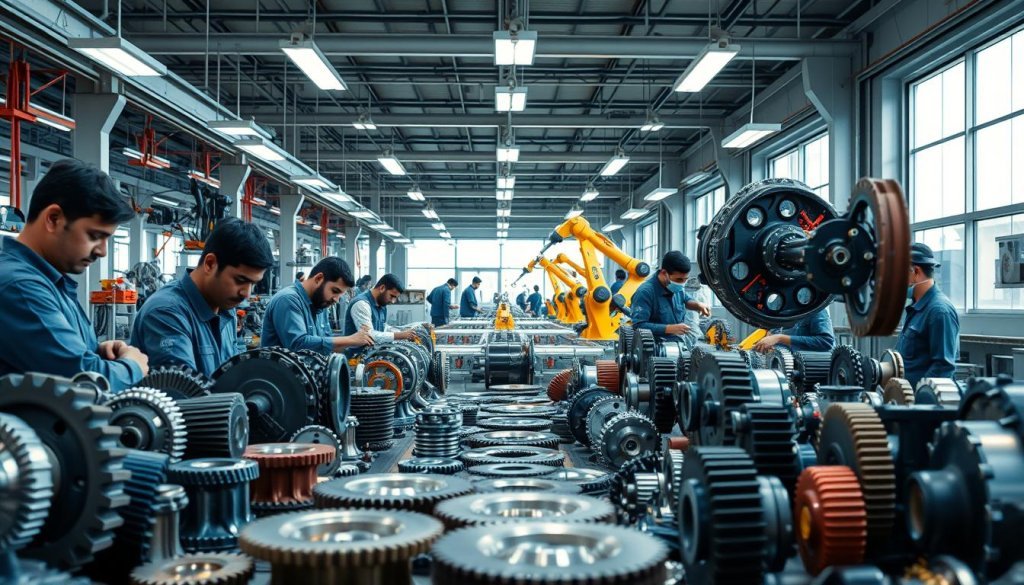
One startling fact: India now supplies parts to over 50 countries, and demand is rising faster than many expect.
The indian auto sector is expanding quickly. Indian manufacturers are seeking clear, digital ways to reach buyers abroad.
To win global contracts, suppliers must show quality, reliability, and a deep grasp of buyer needs. Data-driven outreach helps them spot high-value markets and connect with key decision makers.
Is Gasimo the right outbound partner for you?
Three fields. Thirty seconds. We only follow up when there is a genuine fit.
Successful firms focus on tailored messages, smart prospect research, and multi-channel contact plans. This approach helps scale operations and build long-term partnerships.
For practical steps on building a strong sales pipeline and strategic outreach, they can follow a proven framework that guides targeted prospecting and follow-up best practices.
Key Takeaways
- Indian manufacturers can scale by aligning offers with international buyer needs.
- Data-driven outreach uncovers higher-value opportunities overseas.
- Short, personalized messages improve response from global decision makers.
- Multi-channel sequences and tracking boost long-term partnerships.
- Manufacturing excellence plus clear positioning builds trust with importers.
The Current Landscape of Indian Auto Component Exports
India’s parts industry is shifting from regional supplier to global contender. Strong domestic demand and rising international orders are fueling rapid growth. The sector now balances commodity items with higher-value, precision parts for global automobile makers.
Market Growth Projections
The industry is projected to reach US $200 billion by FY26, a figure driven by both domestic consumption and cross-border sourcing. Exports rose 8% to US $22.90 billion in FY25, showing steady momentum.
Emerging Export Trends
India sits as the third-largest automobile market in the world, which helps local suppliers win larger contracts abroad. Global manufacturers increasingly view the country as a reliable sourcing hub for quality parts.
- Higher-value parts: Demand is shifting toward precision and specialized modules.
- Strategic sourcing: International firms are deepening ties with Indian makers.
- Quality focus: Meeting strict global standards is now a core priority.
In short, measurable growth, rising exports, and enhanced sourcing relationships position India to capture more share in worldwide automobile supply chains.
Understanding the Global Demand for Quality Parts
Global buyers now prize precision-made parts that blend durability with tight tolerances. This rising demand pushes suppliers to strengthen quality systems and testing protocols.
Suppliers with consistent workmanship find their parts sought after in Europe, North America, and Asia. They win repeat orders by proving reliability and timely deliveries.
Many procurement teams prefer vendors who balance cost with certification and process control. Indian makers increasingly match those expectations by adopting advanced machining and inspection tools.
- Durability matters: buyers want parts that last under tough conditions.
- Tech adoption: digital inspection and automation raise supplier credibility.
- Market fit: understanding segment-specific demand helps suppliers scale abroad.
Strategic Advantages for Indian Manufacturers
Indian manufacturers can turn cost advantages into global market share when they pair efficiency with quality control.
Leveraging Cost Competitiveness
India offers a highly efficient manufacturing base where operational expenses run roughly 10–25% lower than in Europe or Latin America.
The large pool of skilled labor and strong technical education helps manufacturers produce complex parts reliably and at scale.
- Raw material savings: Second-largest steel output lowers the cost of inputs for parts production.
- Advanced plants: Strategic investments keep quality high while holding down unit cost.
- Process gains: Component manufacturers adopt lean methods to tighten cycles and reduce waste.
These factors make Indian firms attractive partners for global buyers seeking cost-effective parts without sacrificing quality.
With continued focus on innovation and cost control, manufacturers in India can expand their share of the worldwide market for automotive parts.
Navigating International Trade and Tariff Challenges
Recent tariff shifts are reshaping cost models for Indian firms that ship parts overseas. Companies must act quickly to protect margins and keep shipments moving.

Impact of Recent Tariff Adjustments
The 25% tariff on imported key automobile parts, effective May 03, 2025, raised import costs sharply. Many exporters saw immediate pressure on margins and pricing.
Suppliers face higher landed costs that affect competitiveness in major markets. Import duty changes also complicate contract terms and delivery planning.
Strategies for Cost Mitigation
Exporters are recalculating the cost structure of parts to decide what to absorb and what to pass to buyers. This analysis helps set sustainable prices for long-term contracts.
- Work with overseas partners to reclassify parts where allowed and reduce duty exposure.
- Diversify trade routes and consolidate shipments to lower per-unit costs.
- Localize select production steps to cut import burdens and shorten lead times.
Successful firms combine careful cost modeling with agile supply chains. That approach keeps exports competitive while meeting changing trade and duty rules.
Mastering Auto Components Export Lead Generation
Winning international contracts depends on creating conversations that turn into commercial commitments.
Gasimo helps Indian manufacturers and trading business teams reach high-value buyers abroad. They work with founder-led teams, lean GTM squads, and high-ACV AI SaaS firms to get qualified replies and booked calls.
Rather than handing over generic lists, Gasimo crafts sales-ready outreach. The focus is on wholesale distributors, importers, procurement teams, and channel partners who drive procurement decisions.
- Identify operations-heavy B2B buyers that need reliable partners.
- Create targeted sequences that convert interest into accepted SQLs and meetings.
- Free manufacturers to focus on production while experts handle outreach and follow-up.
“Qualified commercial conversations beat broad lists every time.”
A systematic approach to targeting and messaging lets Indian makers scale export efforts and win lasting partnerships in key global markets.
Identifying High-Value Buyer Segments
A clear map of high-value buyers shortens sales cycles and raises market share quickly.
Targeting wholesale procurement teams helps manufacturers place their best parts and products where demand is steady. These buyers buy in volume and value reliable supply, certification, and consistent quality.
Targeting Wholesale Procurement Teams
Wholesale procurement teams are the gateway to large markets and long-term contracts. They prioritize suppliers who match technical specs, delivery windows, and cost targets.
Manufacturers who analyze buyer needs can tailor their products and pricing to fit specific market segments. That focus improves relevance and boosts chances of repeat orders.
- Prioritize volume buyers: those who move many parts across regions.
- Match product fit: adapt designs for distributor catalogs and regional standards.
- Streamline outreach: focus sales effort on the most profitable procurement teams.
“Engaging the right procurement team converts single orders into stable market share.”
When firms target these segments, they secure steadier demand and a clearer path to growing their market share for premium auto parts.
The Role of Digital Outreach in Modern Manufacturing
Digital channels now let manufacturers showcase factory capabilities to buyers across time zones.
Modern manufacturing needs clear, consistent digital presence. Targeted messages help teams reach the right procurement contacts in the global auto market.
Effective outreach mixes product demos, spec sheets, and short case studies. This builds trust when travel is limited and speeds buyer decisions.
- Use platformed content to highlight quality and delivery records.
- Share measurable results to back technical claims and certifications.
- Maintain regular, low-friction touchpoints that keep buyers engaged.
“Meaningful connections online lead to durable partnerships across borders.”
| Channel | Key Feature | Buyer Benefit |
|---|---|---|
| Video demos | Shows process and QC in minutes | Speeds technical approval |
| Technical pages | Downloadable specs and certificates | Reduces clarification cycles |
| Targeted outreach | Segmented messages by buyer need | Raises reply rates |
Manufacturers that embrace data-driven outreach gain an edge. For a practical guide to targeted international contact, see this resource on commercial vehicle spare parts at commercial vehicle spare parts outreach.
Building Sales-Ready Conversations with Global Partners
Conversations that move beyond introductions create real buying intent between suppliers and global partners.

Generating Qualified Replies
Gasimo helps manufacturers get replies that matter. They target wholesale distributors, importers, procurement teams, and channel partners so messages reach decision makers.
Each reply is screened for intent and fit. That saves time and keeps outreach focused on partners who need the parts or product the supplier offers.
Booking High-Intent Sales Calls
Booking calls with buyers who have real need shortens the path to an order. Gasimo schedules high-intent sales calls so teams spend their time on commercial conversations, not casual queries.
These booked calls let manufacturers present a specific product or part and discuss terms, delivery, and certification in one session.
Developing Sales-Ready Conversations
Developing these conversations takes time, but it builds durable relationships. Each qualified discussion brings a supplier closer to becoming a preferred partner.
- Focus on high-intent calls to maximize productive sales time.
- Treat every interaction as an opportunity to show product value and reliability.
- Create a steady pipeline of sales-ready conversations to drive long-term growth.
For a practical guide on creating qualified buyer conversations, see qualified buyer conversations.
Leveraging Government Initiatives for Export Growth
Recent policy moves are directing capital into factories and tech that prime suppliers for global trade.
Production-linked incentives and similar programs gave the sector a tangible boost in FY2025. Nearly US $2.5–3 billion flowed into capacity expansion and EV parts development.
That funding helps suppliers invest in machines, testing labs, and teams that meet strict buyer standards. As a result, Indian firms become more competitive in crowded markets and better placed to win exports.
Government support also simplifies trade hurdles. Programs provide compliance help, finance lines, and market access schemes that ease entry into new regions.
- Scale faster: capital reduces time to raise production capacity.
- Upgrade tech: funds enable modern tooling and quality control.
- Access markets: policy-backed programs open trade channels and buyer introductions.
“Suppliers aligning strategy with these schemes find it easier to secure funding and expand overseas.”
Overall, these initiatives set a foundation for steady growth and larger export volumes as the sector builds world-class capabilities.
Testing New Markets and Messaging Strategies
A short pilot in a new region often reveals if a product fits real buyer needs. Targeted tests reduce risk and show where to invest before a full-scale market push.
Gasimo helps manufacturers test ICPs, channels, buyer wedges, and offers so they avoid costly GTM mistakes. These pilots check whether products and messaging resonate with procurement teams in each market.
Refining Buyer Wedges and Offers
Start with a tight value statement that answers a buyer’s core problem. Then run short outreach and measure replies, technical questions, and intent to buy.
Feedback from these trials guides how to tweak product specs and production priorities. That makes scaling smoother and reduces the chance of inventory or capacity mismatch.
- Validate buyer fit before committing to export or a new production plan.
- Refine offers so products attract high-value buyers in targeted regions.
- Use iterative messaging tests to improve reply and engagement rates.
“A well-refined buyer wedge can be the difference between a successful market entry and a missed opportunity.”
Overcoming Barriers to Entry in Competitive Regions
Gaining a foothold in tough markets requires more than price — it needs regulatory savvy and product proof. Local trade rules shape every deal, and missing one requirement can stall shipments or bids.
Manufacturers often meet entrenched suppliers for engine parts and specialist equipment. To compete, they must highlight a clear value proposition: better durability, test data, or faster lead times.
Practical moves include partnering with trusted local distributors to navigate customs, certifications, and buyer expectations. These partners ease entry and speed acceptance in new auto markets.
- Invest in testing: certifications prove reliability to procurement teams.
- Local partnerships: help with compliance and channel access.
- Differentiate the product: focus on unique performance or cost-to-life benefits.
“Persistence, adaptability, and certified quality turn initial trials into lasting market share.”
With the right strategy and patience, Indian manufacturers can clear trade hurdles and establish long-term presence in competitive global markets.
Optimizing Supply Chain Visibility for Overseas Buyers
Real-time visibility into every production stage turns uncertainty into predictable supply for international buyers.

Transparent updates on parts status build trust with procurement teams that manage imports. Clear timelines cut questions and lower the risk of late shipments.
Digital tools let manufacturers show where each item sits in the production line and the estimated ship date. This makes the import process smoother for buyers and reduces ad-hoc coordination.
- Track production milestones and confirm quality checks.
- Share ETA and shipment documents to speed customs clearance.
- Offer dashboards that overseas buyers can access on demand.
“Visibility into the supply chain is now a baseline expectation for large buyers.”
| Visibility Feature | What it shows | Buyer benefit |
|---|---|---|
| Milestone tracking | Stage, date, QC pass/fail | Fewer import delays |
| Shipment ETAs | Carrier, port, arrival window | Improved planning |
| Document portal | Certificates, packing lists | Smoother customs |
Manufacturers who invest in digital visibility gain a clear market edge. For firms building SaaS-driven supply tools, see outbound for AI supply chain SaaS for practical approaches that appeal to large procurement teams.
Scaling Operations Through Strategic Partnerships
Forming targeted partnerships gives suppliers the distribution and compliance support needed to grow overseas.
Collaborations let Indian manufacturers tap established networks to reach new export markets faster. By linking with trusted foreign partners, they shorten time-to-market and gain access to buyers who already trust those channels.
Shared risk is a core benefit: partners split initial costs for tooling, certification, and trial shipments. That makes it easier to scale production without overstretching capital.
Successful alliances rest on mutual trust and a joint commitment to quality. When suppliers align on standards and timing, the whole supply chain becomes more reliable for overseas buyers.
- Leverage partner networks to expand export reach.
- Share testing and certification to meet buyer requirements.
- Coordinate forecasts to ramp capacity while protecting margins.
“Partnerships turn capacity constraints into shared opportunity.”
For strategy on working with global manufacturers and market entry, see this study on foreign maker strategies.
The Impact of Electric Vehicle Trends on Export Potential
Rising demand for battery tech is reshaping which suppliers win shelf space in global vehicle markets. Manufacturers in India see clear opportunities to shift production and capture new buyers abroad.
Opportunities in EV Battery Components
The EV market is expected to reach US $206 billion by 2030, and that growth drives demand for battery packs, modules, and cell housings. Suppliers that master these parts gain an edge in the global automobile value chain.
Indian firms are adapting production lines to make high-quality components for electric vehicles. This includes battery trays, thermal management parts, and new powertrain pieces that replace traditional engine components.
Export potential rises for companies that prove reliability and certification. As more countries adopt electric vehicles, consistent quality and timely delivery become key to winning long-term contracts.
- Pivot fast: retool for battery and module work to access rising demand.
- Invest in R&D: battery chemistry, testing, and thermal design improve market fit.
- Partner locally: tie up with OEMs and global buyers to scale production and reach new vehicle markets.
“The future of the automobile industry is linked to EV success; suppliers who adapt will lead market shifts.”
Future Outlook for the Indian Auto Component Industry
Rising quality standards and fresh capacity place Indian makers in a strong position for global orders.
The sector sees steady demand from domestic buyers and overseas partners. Manufacturers modernize plants and adopt testing to secure more business abroad.
Technological upgrades and an innovation focus will drive growth. Firms that invest in R&D, automation, and EV parts stand to gain sizable market share.
Strategic investments in capacity and skills make the component industry more resilient. This helps India meet changing specs and shorter delivery windows.
- Higher standards raise buyer confidence and repeat orders.
- EV and hybrid opportunities broaden product portfolios.
- Improved certification and logistics boost export volumes.
| Driver | Impact | Timeline |
|---|---|---|
| Quality & Certification | Higher acceptance by global buyers | 1–3 years |
| EV Shift | New product demand and margins | 2–5 years |
| Capacity & Tech | Scalable supply and lower lead times | 1–4 years |
“With clear focus and smart investment, the sector can turn current momentum into long-term global influence.”
Conclusion
Bottom line, Indian manufacturers stand ready to scale overseas by pairing cost strengths with consistent quality.
Strategic digital outreach and focused engagement with procurement teams help turn interest into lasting partnerships. Clear supply visibility and smart trade planning protect margins and speed deliveries.
The electric vehicle shift opens fresh demand for new parts and higher-value work. Firms that invest in testing, certifications, and targeted partnerships will find faster paths to market.
By prioritizing high-value buyers, keeping messages relevant, and using data to guide pilots, Indian firms can grow sustainably and win meaningful contracts across regions.